 Dr. K. Kumaragurubaran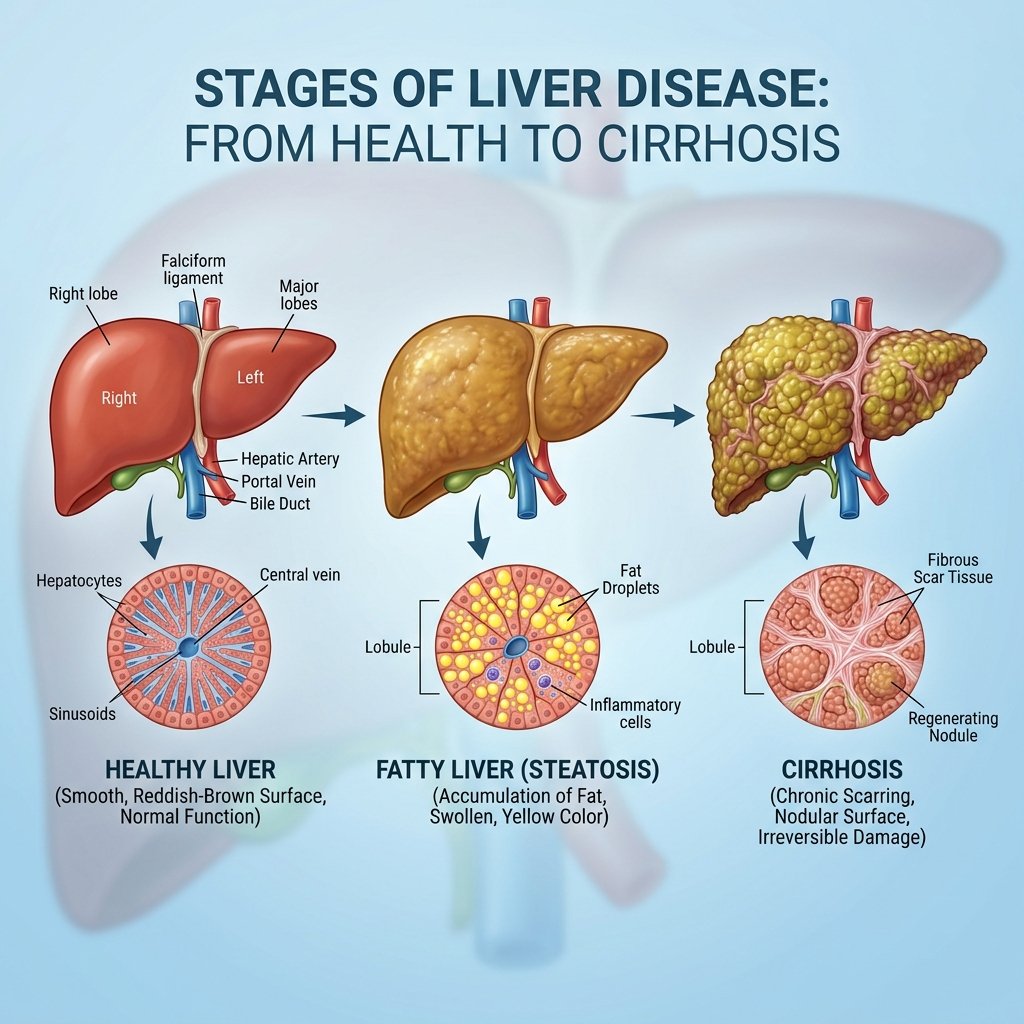
Cirrhosis is a late-stage liver disease characterized by extensive scarring (fibrosis) of the liver caused by long-term damage. Whenever your liver is injured—whether by disease, excessive alcohol consumption, or other causes—it tries to repair itself. In the process, scar tissue forms. As cirrhosis progresses, more and more scar tissue forms, making it difficult for the liver to function.
The Four Stages of Cirrhosis
Understanding the stages of cirrhosis can help patients and their families better comprehend the progression of the disease and the necessary medical interventions.
Stage 1: Compensated Cirrhosis without Varices
In this early stage, there is significant liver scarring, but the liver can still perform many of its essential functions. Patients are largely asymptomatic. There are no esophageal varices (enlarged veins in the esophagus) present. With proper management and lifestyle changes, progression can be halted.
Stage 2: Compensated Cirrhosis with Varices
In Stage 2, the liver is still largely able to compensate for the damage, but portal hypertension (increased pressure in the portal vein system) causes the development of varices. While patients may still feel relatively well, the presence of these enlarged veins introduces the risk of internal bleeding.
"Early detection and monitoring are paramount. A patient in compensated stages can live a long, fulfilling life if the underlying cause of the liver disease is actively managed."
Stage 3: Decompensated Cirrhosis with Ascites
This is a critical turning point. "Decompensated" means the liver can no longer effectively perform its vital functions. One of the hallmark signs of Stage 3 is the development of ascites—an accumulation of fluid in the abdomen. Patients may also experience severe fatigue, confusion, and jaundice.
Stage 4: Decompensated Cirrhosis with Bleeding
This is the most advanced and severe stage. It involves gastrointestinal bleeding, usually from ruptured varices in the esophagus or stomach. It is a medical emergency requiring immediate hospitalization and specialized care. In this stage, liver transplantation is often considered as a primary treatment option.
Managing and Treating Cirrhosis
While the scar tissue in cirrhosis is largely irreversible, treatments are focused on stopping or delaying further progression, minimizing symptoms, and preventing complications. If you or a loved one are concerned about liver health, prompt consultation with a hepatologist is vital.